
Heritage record
Ghanta Ghar Multan
PunjabTowerProtected
The Ghanta Ghar clock tower stands in central Multan directly west of the city`s old fortress, and immediately across the street from a major roundabout where a number of streets converge. Built from 1884-88, it is anIndo-Saracenic style building which was used as the headquarters of the municipal government under the direction of the British Raj, who ruled the British Indian empire from 1858-1947.The British had taken control of Multan in 1849 from the collapsing Sikh Empire, beginning 100 years of British rule over the city. Even in 1884, almost two generations following the siege that won the city for Britain, large areas of Multan remained in ruins. The decision was made to construct a grand municipal office building over the ruins of thehaveli(mansion) of Ahmad Khan Sadozai, which had been destroyed during the siege. Construction took about four years and the building was named Ripon Hall in honor of the 1st Marquess of Ripon, who ruled as Viceroy of India from 1880-84. The central feature on the buildings south facade its clock tower was dubbed North brook Tower in honor of the 1st Earl of Northbrook, the former Viceroy who served from 1872-76.The hall was constructed in the Indo-Saracenic style which was quite popular throughout Britain`s south and southeast-Asian colonies (for examples of this style, see the Gateway of India, or the Sultan Mosque and Abdul Gafoor Mosque of Singapore). The style was popularized by British architects who synthesized Victorian-era Gothic and Neo-Classical styles with the Muslim traditions of the Raj in India. Hallmarks of this style included the use of cusped arches, projecting eaves, and a multitude of domes, turrets, and cupolas on the rooftop, as well as the use of native building materials such as sandstone and marble. Following liberation from British rule in 1947, the hall was renamed Jinnah Hall but continued to function as an administrative center. As the city grew, office space became scarce and the city`s administration moved to a different building. The building remained empty for several decades and its famed clocks no longer told the time. However, in 2011 the Swiss watch company Rado refurbished the clocks and installed solar-powered batteries to ensure uninterrupted power. This coincided with a push to spend 40 million Pakistani rupees to turn the building into a museum, work which was about 50% complete by 2011 according to an article in Dawn (as noted below in the bibliography). However, as of 2019 the building remains empty of exhibitions but appears to be in generally sound physical condition, though portions of the interior remain dilapidated.
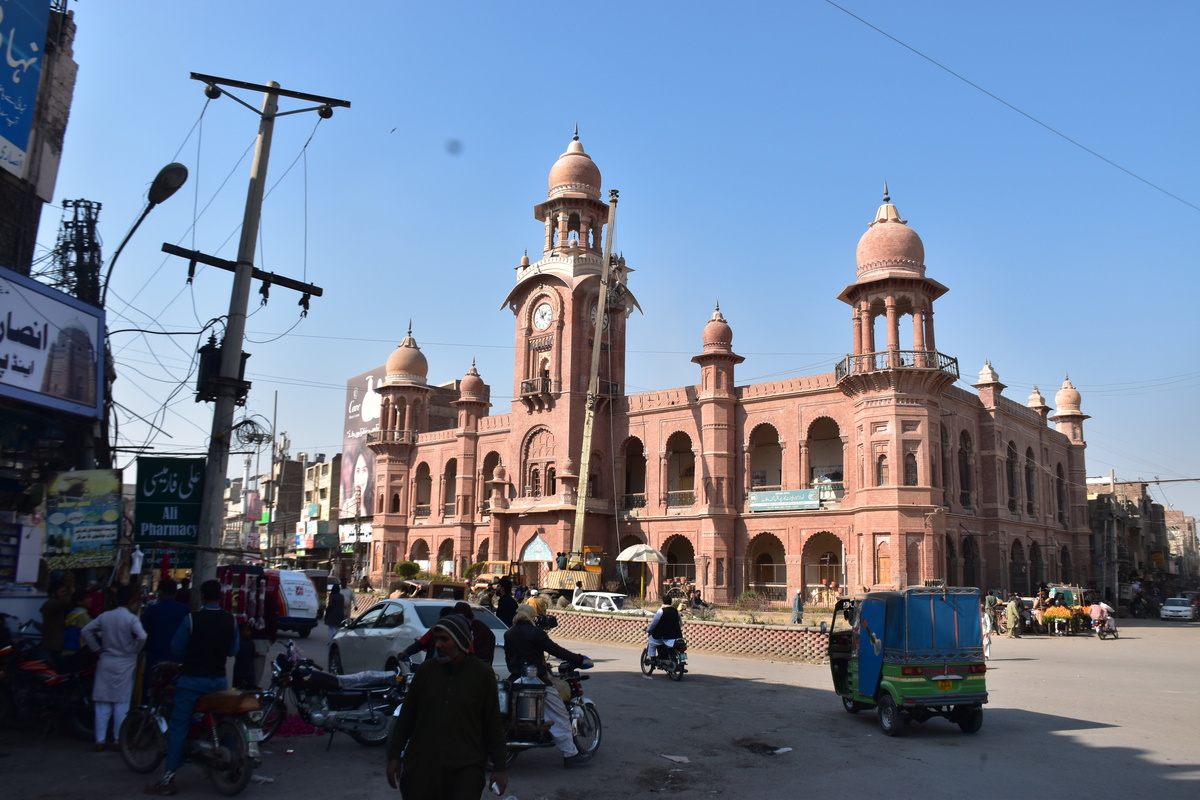
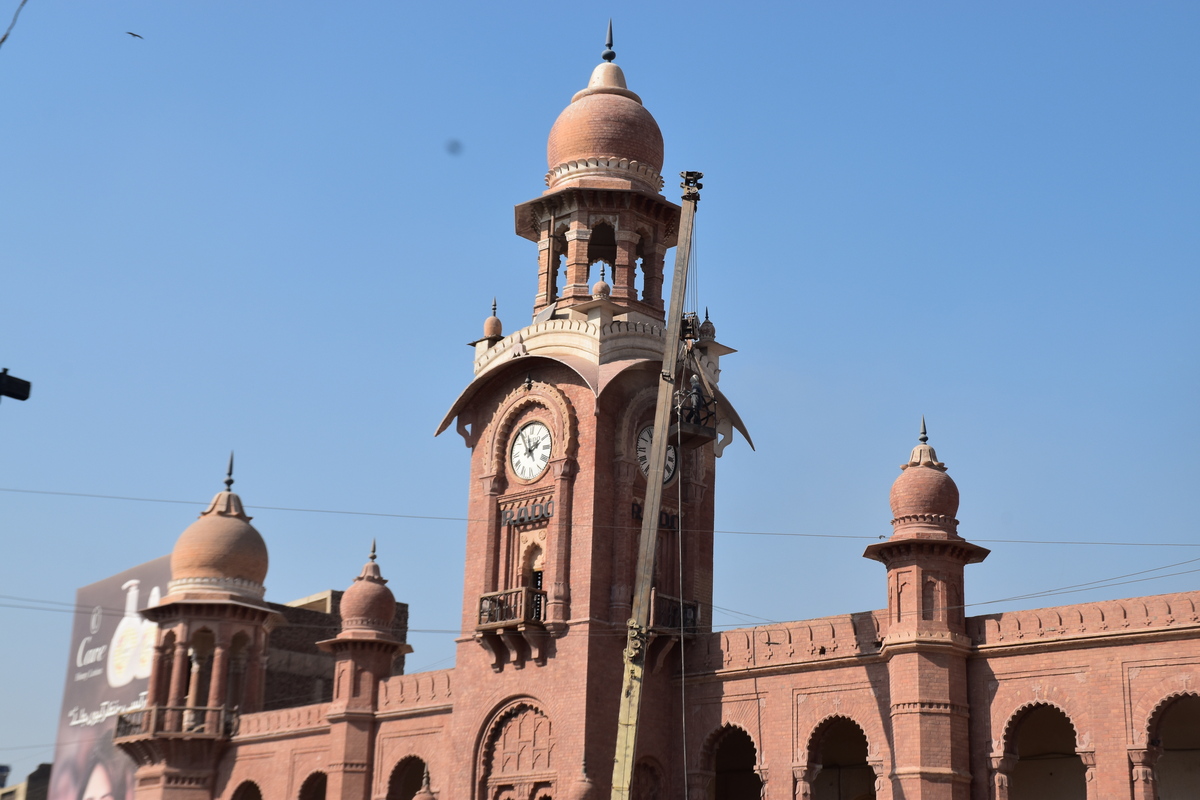
Photographs: Department of Archaeology & Museums national inventory record, displayed from the official source (doam.gov.pk). Not PWHI photography.
- Record ID
- 10385
- Province / territory
- Punjab
- District
- Multan
- Typology
- Monument
- Subtype
- Tower
- Period
- Historic
- Legal status
- Not Protected — UNVERIFIED; no statute or notification cited
- Coordinates
- 30.19880, 71.46784 — source-provided, not field-verified
- Verification status
- source_record; automatically_standardized; verification_required
- Sources
- Anonymous. (2022 (retrieved)). Ghanta Ghar Clock Tower (1884-88). https://www.orientalarchitecture.com/sid/1389/pakistan/multan/ghanta-ghar-clock-tower.
Found an error in this record? Submit a correction — quote record ID 10385.
Pakistan's Heritage Digital Ecosystem: Heritage Atlas · PWHI · Visual Record · Forum