
Heritage record
Takht-i-Bahi
Khyber PakhtunkhwaStupa & MonasteryWorld Heritage propertyProtected
This is one of the most important and best-preserved Buddhist monastic complexes in Peshawar Valley. Takht-i-Bahi was first excavated in 1878 by Sergeant Wilcher, while proper excavations were conducted here by D.B. Spooner during 1907 to 1909 and by H. Hargreaves during 1910-11. Later on, large scale excavations were also conducted by Abdul Azeem (Department of Archaeology and Museums) from 2002-2005. The main complex consists of Monastery with kitchen and refectory in the northeastern part of the huge complex and parallel to the Assembly Hall located in the northwestern part of the complex. The Court of Many Stupas is located on the south of the Monastery in a low flat area, while the Main Stupa Court is located further to the south of the Court of Many Stupas on a high flat ground in a manner that the Court of Many Stupas is sandwiched between the Monastery and the Main Stupa Court. There is an open courtyard towards the west of the Court of Many Stupas, which is in fact the roof of the low-lying or the so-called underground cells. The Courtyard of the underground cells with a platform and high retaining wall lie further to the west. A covered staircase leading to the underground cells lie on the south of the open court in front of the Court of Many Stupas, while the Three Stupa Court lie further to the south. The Wall of Colosi lie further to the south of the Three Stupa Court. Secular buildings are scattered on all sides of the sacred area. Presently the entrance from the north is through a winding path intermittently provided with stairs going up towards south and ultimately turning to the west to enter the Court of Many Stupas. Another access from the north is through the dry water channel on the right side along the hillock going up towards south and then turning towards east through covered staircase to enter the main sacred complex. The same entrance was also used from the south from the side of Sehri Bahlol. The monastic complex has been built according to the contour of the hillock and keeping in view the availability of flat area or creating flat area by means of retaining walls and vaulted arched cells, etc. Many inscriptions were reported from this site, but the famous Takht-i-Bahi inscription on a slab is the most prominent. This stone inscription of the Gondophares period is preserved in the Lahore Museum. The lime plaster of all the interior of the monuments has gone and no decorations have survived. The site is the best preserved amongst all the Gandharan Buddhist sites, but more efforts are needed for its conservation, preservation, restoration of the vulnerable parts and its development.
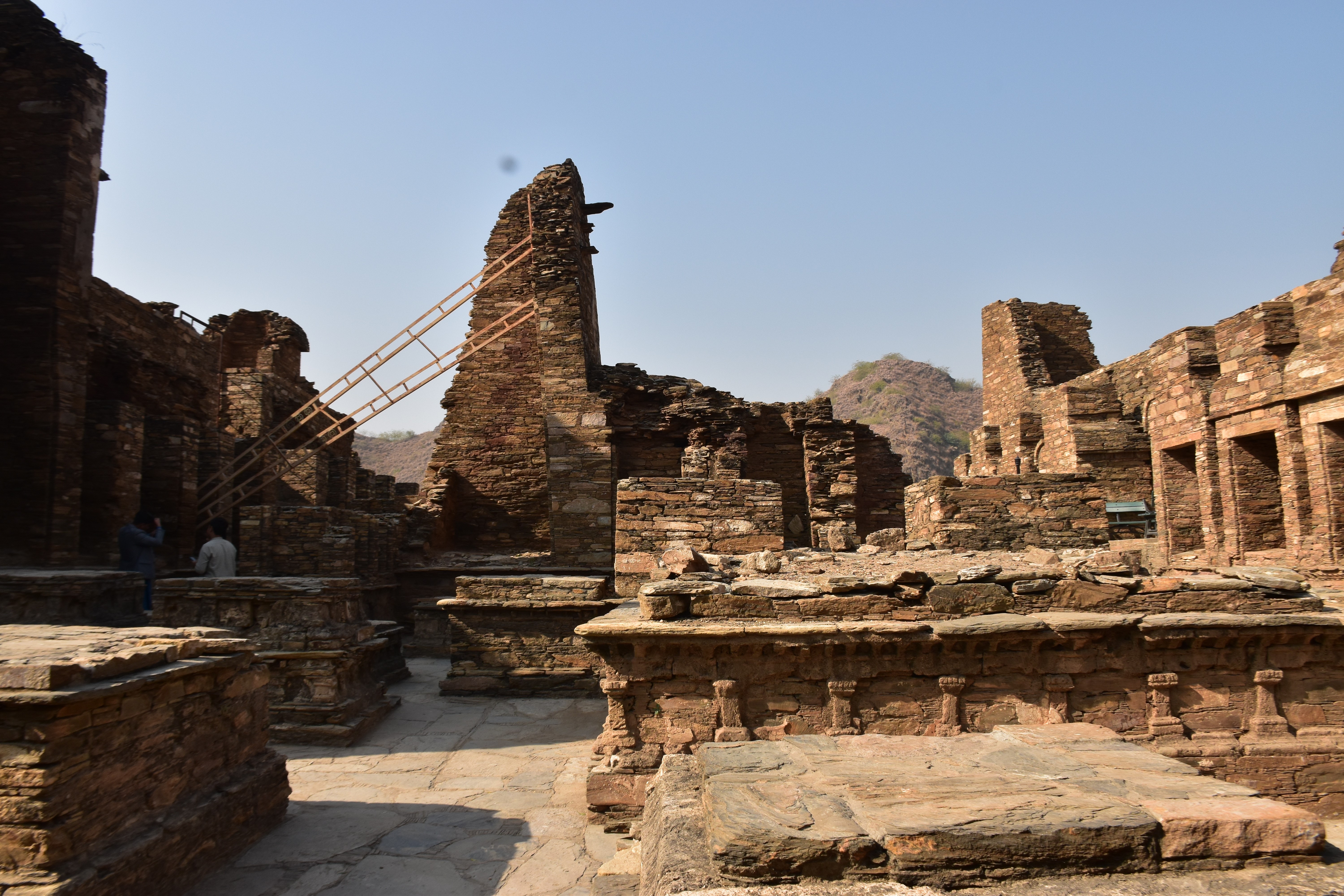
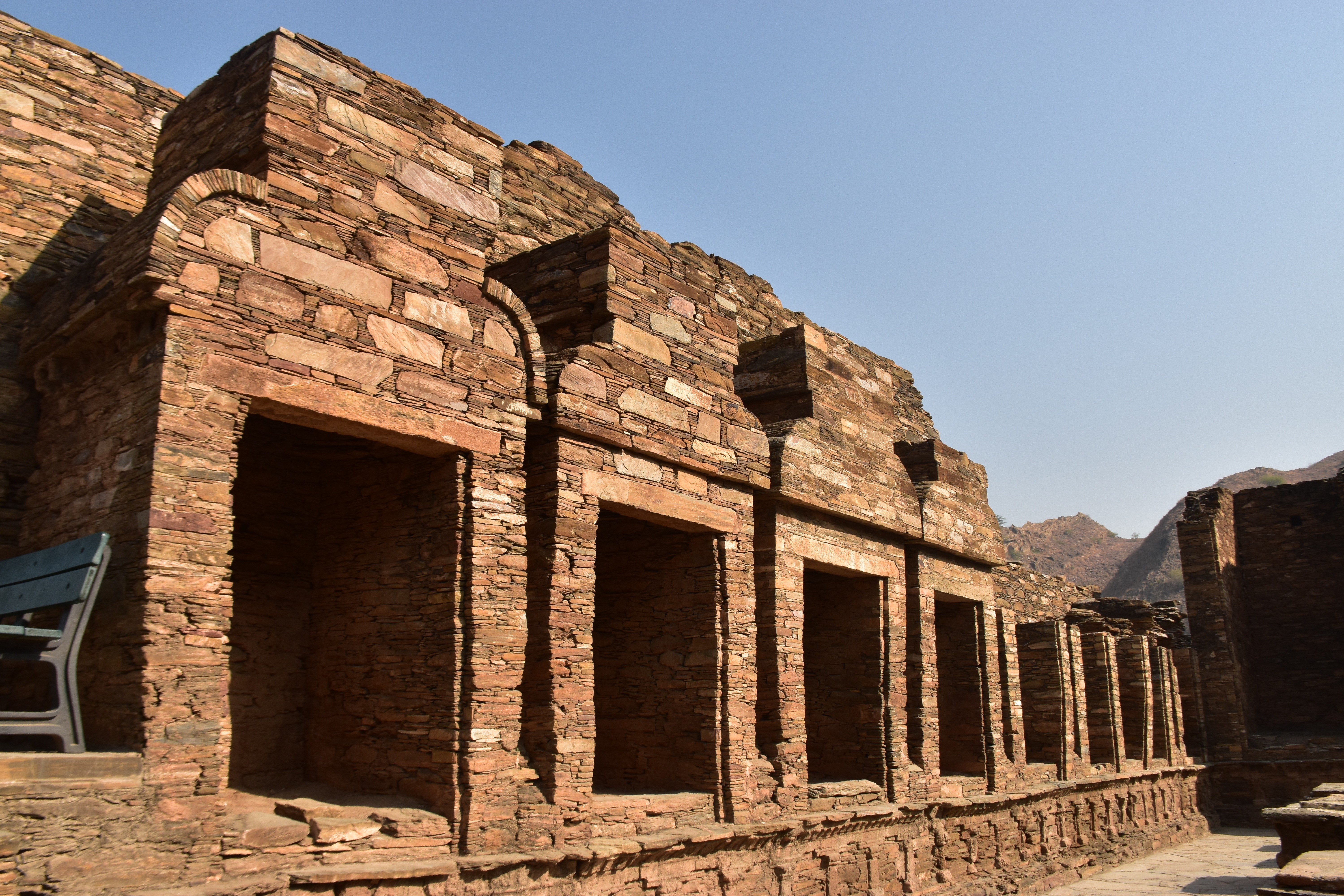
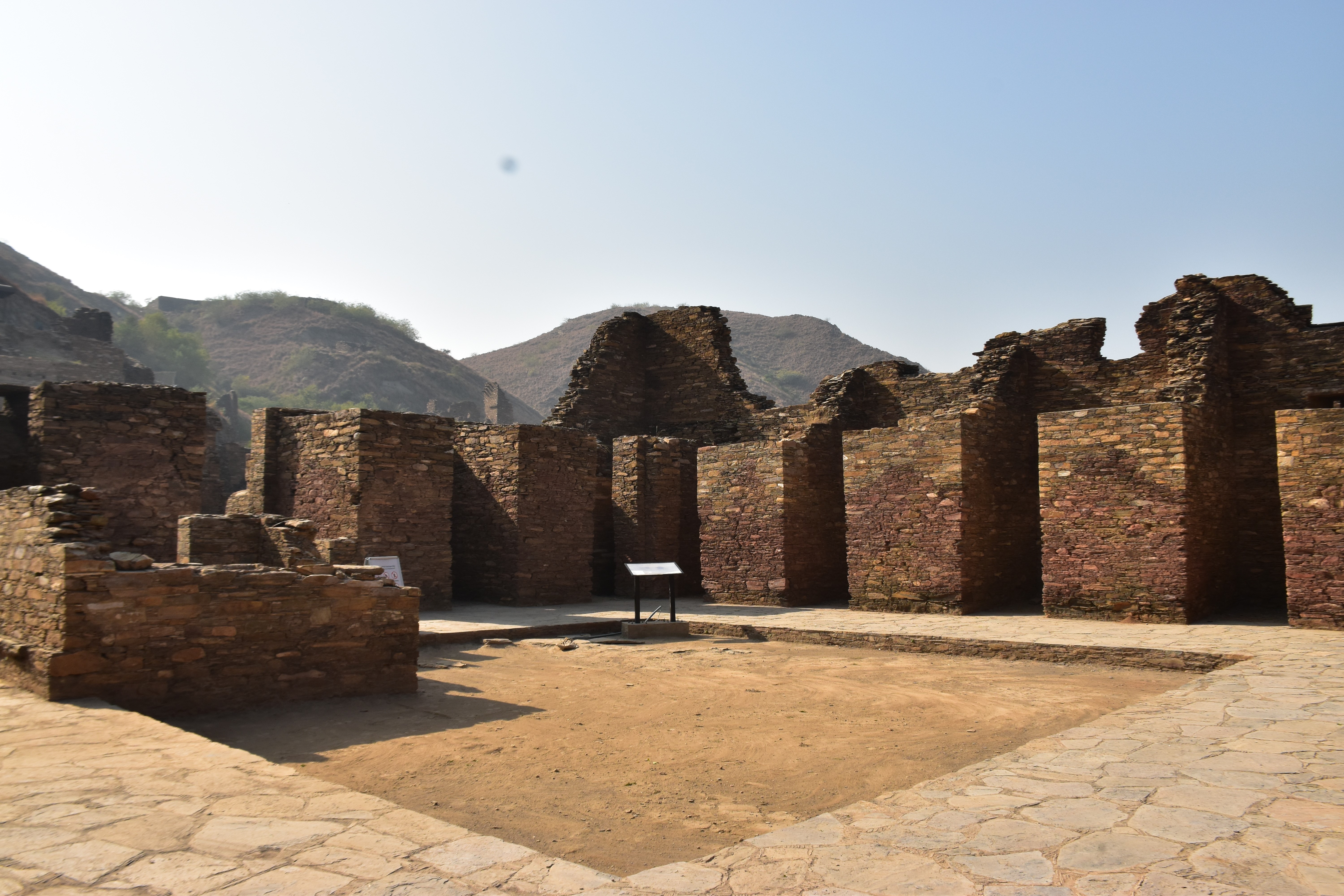
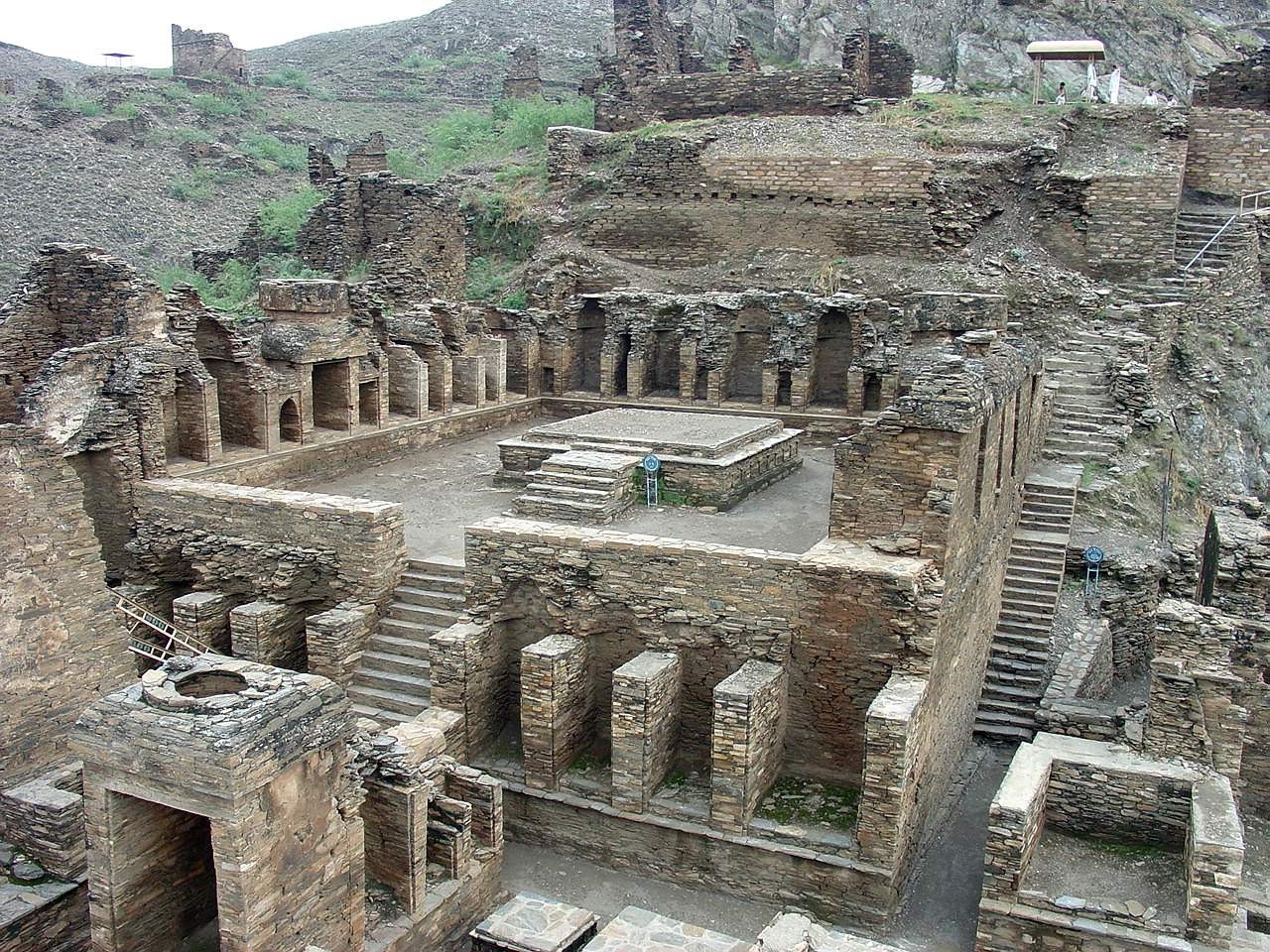
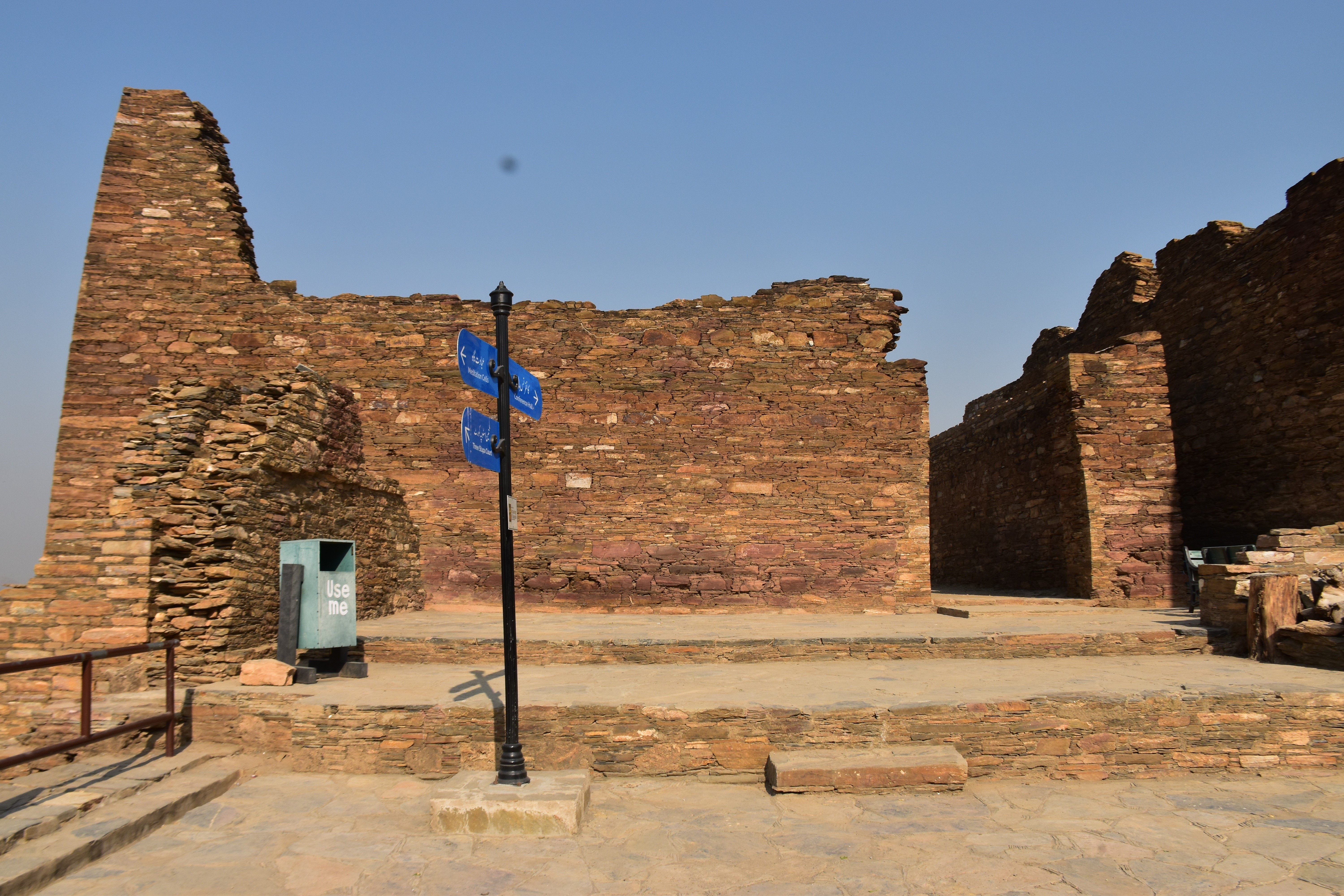
Photographs: Department of Archaeology & Museums national inventory record, displayed from the official source (doam.gov.pk). Not PWHI photography.
- Record ID
- 4624
- Province / territory
- Khyber Pakhtunkhwa
- District
- Mardan
- Typology
- Archaeological Site
- Subtype
- Stupa & Monastery
- Period
- Historic
- Legal status
- Protected by The Antiquity Act 1975 (As amended in 1992) (instrument: Protected by The Antiquity Act 1975 (As amended in 1992))
- World Heritage
- Buddhist Ruins of Takht-i-Bahi and Sahr-i-Bahlol
- Coordinates
- 34.28625, 71.94711 — source-provided, not field-verified
- Verification status
- source_record; automatically_standardized; verification_required
- Sources
- Ali, Taj. (2001). Archaeological Survey of District Mardan in the North-West Frontier Province of Pakistan. Ancient Pakistan Vol. XIV.
Found an error in this record? Submit a correction — quote record ID 4624.
Pakistan's Heritage Digital Ecosystem: Heritage Atlas · PWHI · Visual Record · Forum