
Heritage record
Chilas-II
Gilgit-BaltistanRock ArtProtected
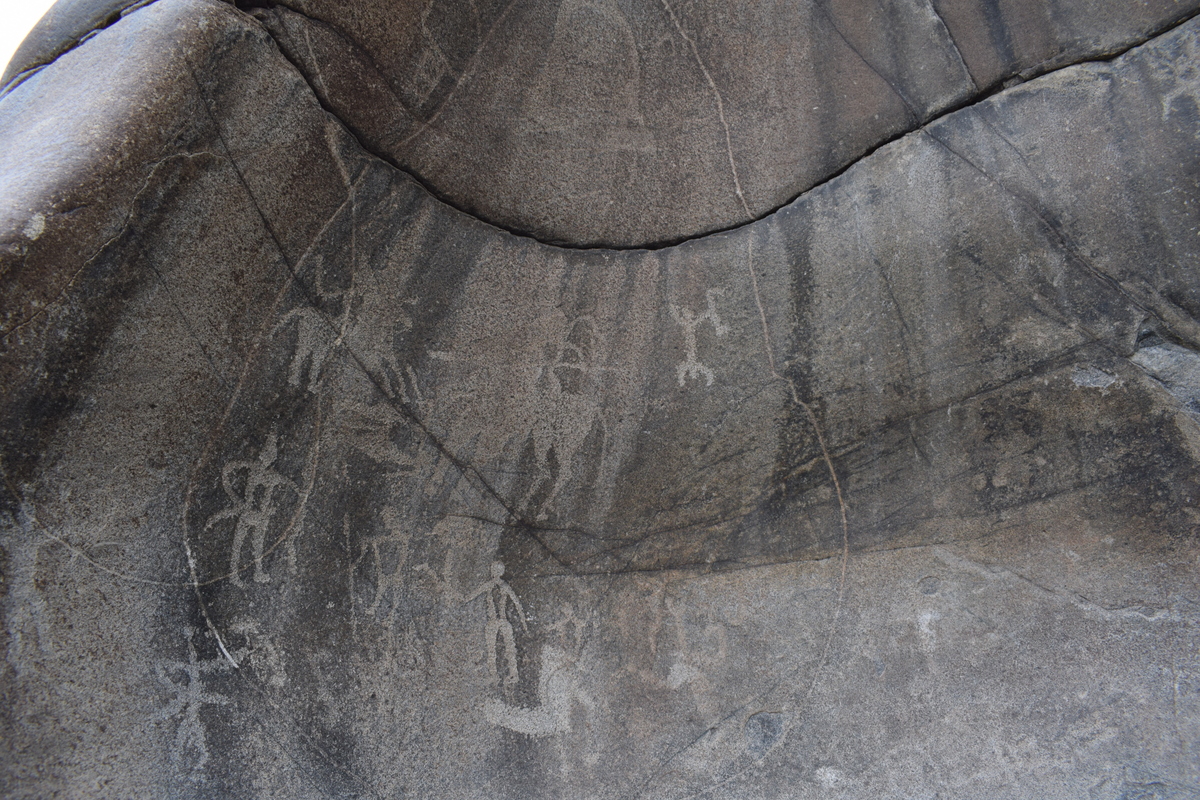
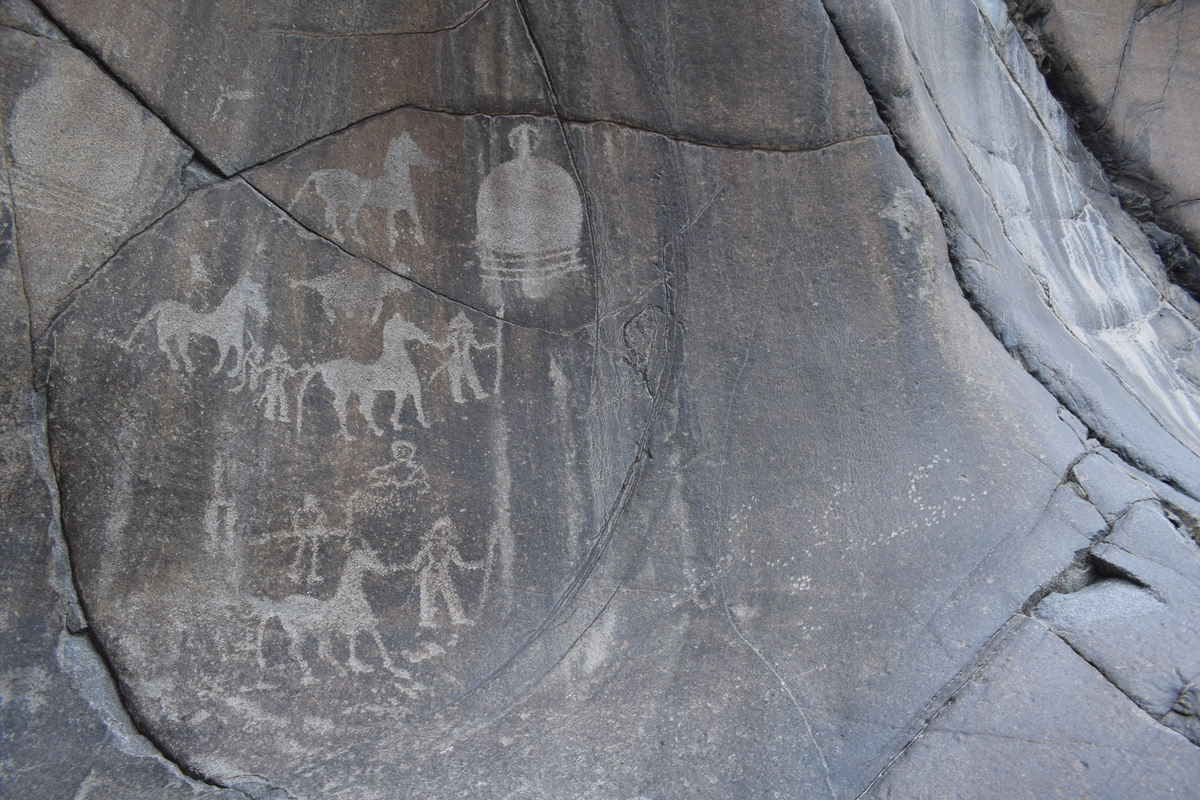
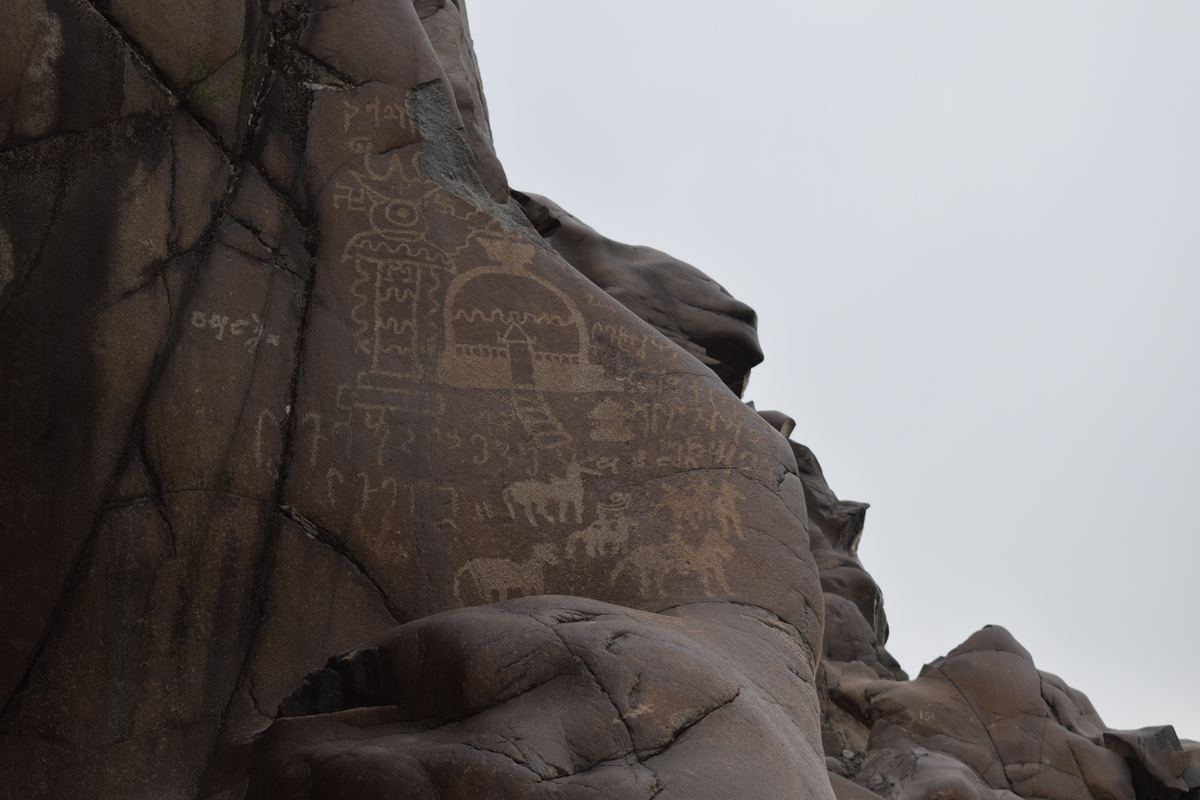
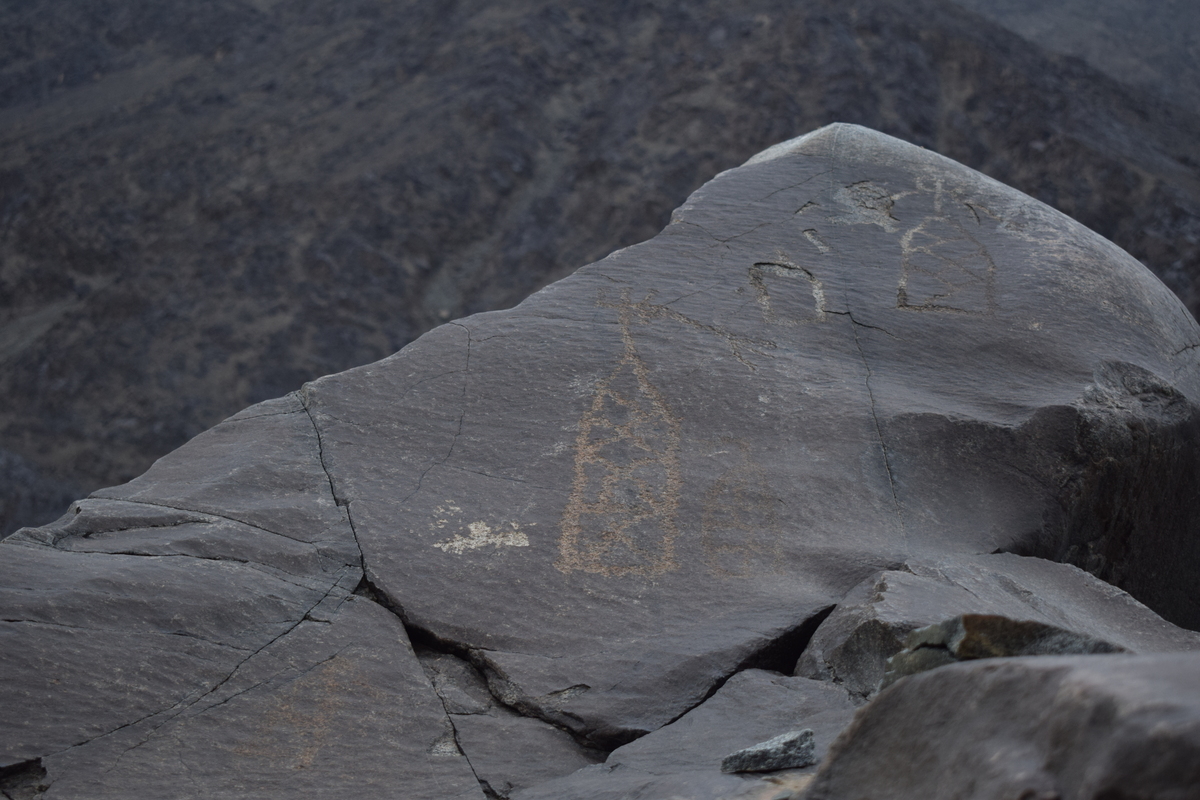
Chilas-II site is situated on the left bank of river Indus on the rock cliffs reached from KKH below the police post at the lower terrace standing in the sandy plain. The name Chilas -11 is given to the second site, discovered in 1979.During the summer, the Indus water flows near the site and leaves behind sandy deposits on the northern face of the rock. On a rough rock pile sloping down towards the river, a large number of petroglyphs are preserved. Actually, there are two rock formations, but only the western rock that has the carvings. The carvings are found on different plane and faces, wherever smooth and flat space is available. The river side has some important inscriptions. The river side face was first used for the purpose of engraving hence all the earliest carvings and inscriptions are found on the vertical face of this side. The site consists here early Buddhist carvings i.e., stupas of early types, animals influence by Achaemenids arts, dancing persons, several male figures, a monk with raised incense burner venerating a stupa, in the background a person with a belted dress with a small flag and a jug, Kharoshti Inscriptions, animals and riders and additional carvings from different periods are found. An anthropomorphically transformed stupa with a disk formed into a stupa by adding a base is also recorded. The name Hariti is clearly readable (1st century CE). Rock carvings of the most archaic stupa types are found at Chilas-II and Chilas-III sites; there the stupa is nearly quadrangular in shape and stands upon a kind of plinth or stand. A drawing at Chilas-II shows the next stage of stupa development in the form of a raised rectangular plinth. A staircase given in a simplified form of a ladder leads up to the platform, where a doorway with a triangular pediment gives access to the circumbulatory platform that is surrounded by railing. Chronologically Chilas II site can be dated to Scythian period (1st century BC) on the basis of Kharoshti paleography although some Kushana period Kharoshti inscriptions have also been noted. At the front face of the rock, besides animal figures, two important carvings are seen. Firstly, a strange anthropomorphic figure. The body is filled solid. The head is represented by a stupa with a pinnacle on its top. A little further is another type of stupa, being worshipped by a monk. The dome has a wavy line in the middle, topped over by a harmika and three umbrellas. All the faces of the rock have several recesses. The carvings have been done in the recesses as well as on the flat surfaces on the rock. Besides front face (eastern face), western, northern and southern faces have different types of stupas, inscriptions, standing male figures in different pose.
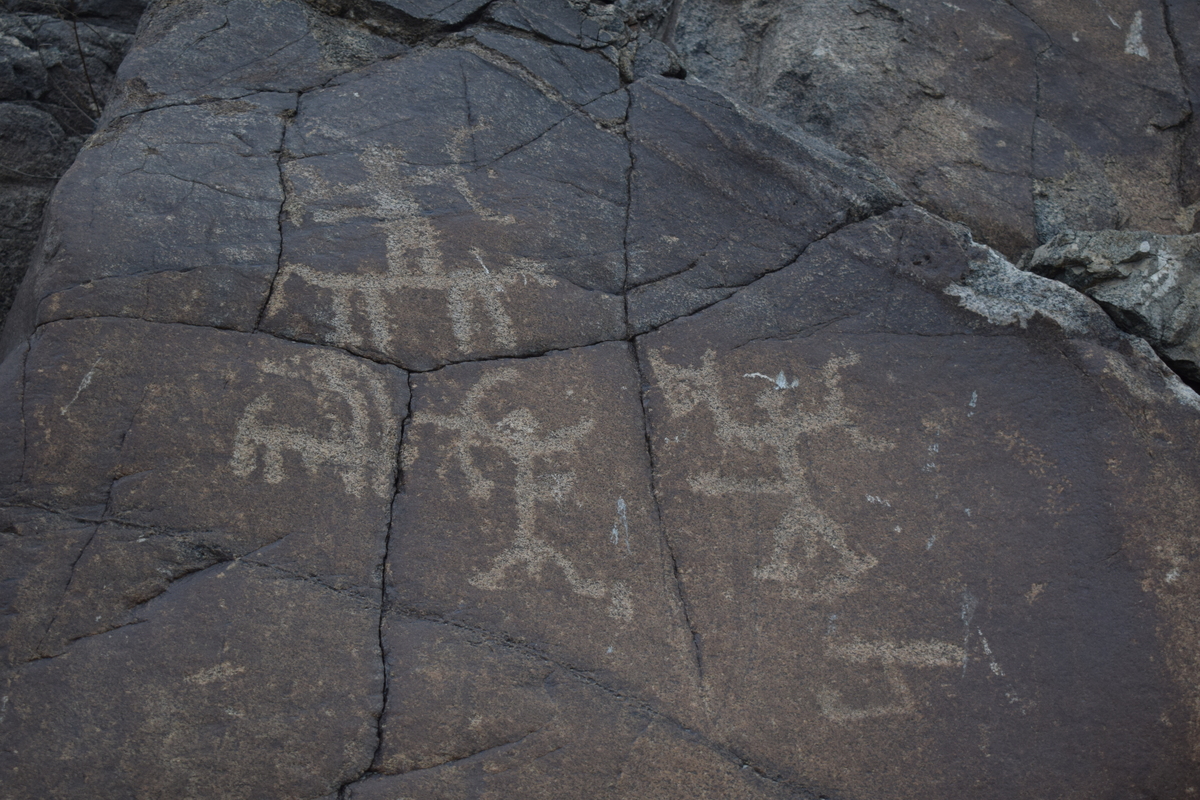
Photographs: Department of Archaeology & Museums national inventory record, displayed from the official source (doam.gov.pk). Not PWHI photography.
- Record ID
- 8281
- Province / territory
- Gilgit-Baltistan
- District
- Diamir
- Typology
- Archaeological Site
- Subtype
- Rock Art
- Period
- Historic
- Legal status
- Not Protected — UNVERIFIED; no statute or notification cited
- Coordinates
- 35.43070, 74.09708 — source-provided, not field-verified
- Verification status
- source_record; automatically_standardized; verification_required
- Sources
- Arif, Muhammad.. (2017). Archaeological Survey of Gilgit-Baltistan by Baltistan Culture and Development Foundation. Unpublished.
Found an error in this record? Submit a correction — quote record ID 8281.
Pakistan's Heritage Digital Ecosystem: Heritage Atlas · PWHI · Visual Record · Forum